| Mad Jack Fuller - a Georgian Squire |
|---|
| | |
|---|
Mad Jack Fuller who was he ?
▲ |
|---|
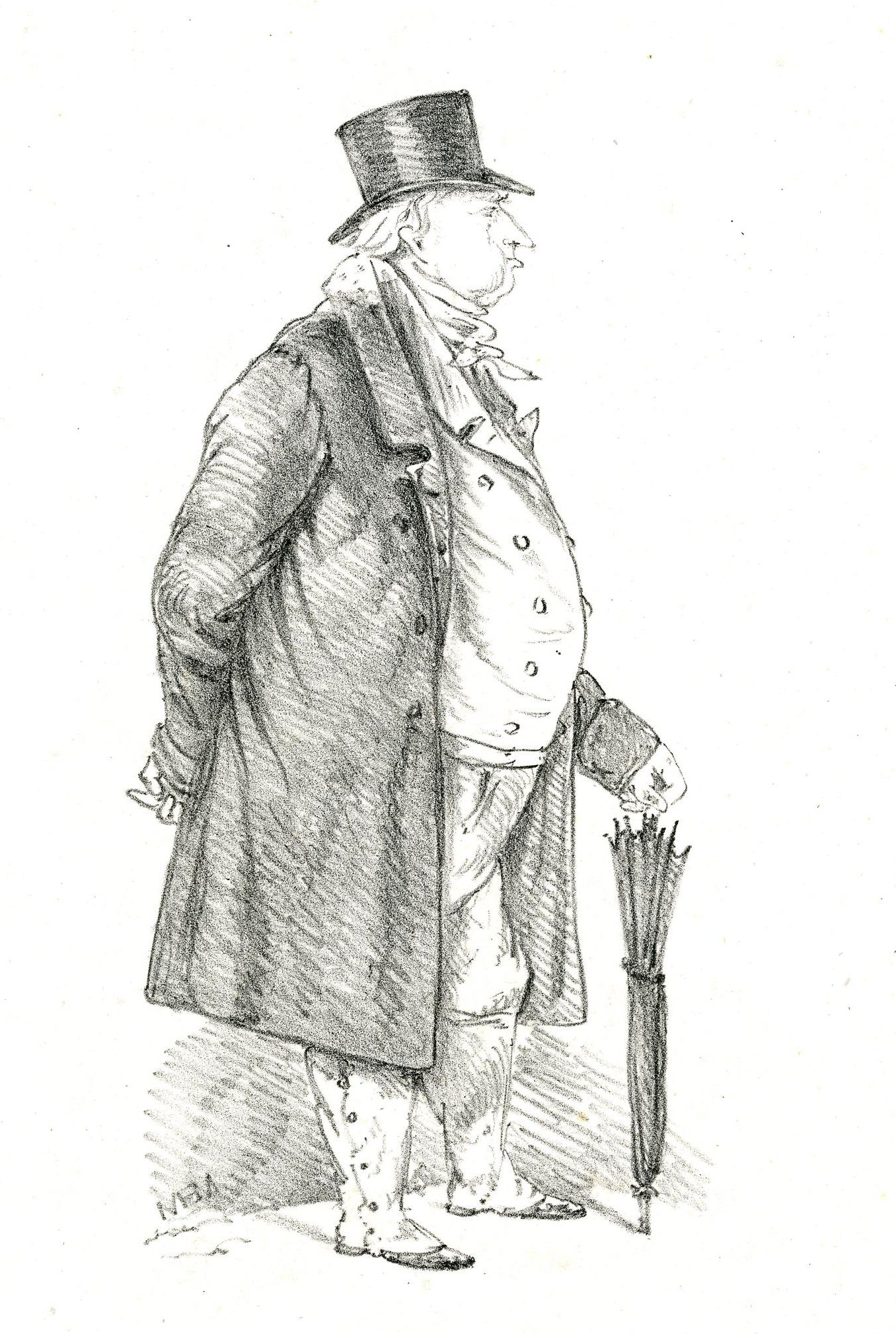 John Fuller (Mad Jack) was born in 1757AD in North Stoneham in Hampshire to Henry Fuller who was a vicar in the area. Henry was the third son of John Fuller (1680–1745) who had increased the family fortune to include Jamaican Sugar Plantations and Cannon Production at Heathfield.
John Fuller's (1680–1745) eldest son John Fuller (1705–1755) had inherited the family fortune when his father died in 1745. However he had no children so the family fortune was inherited by his brother Rose Fuller (1708 - 1777) in 1755 when he died.
Rose also had no children and as Henry Fuller (1713- 1761) his brother had died in 1761, the only male relative left was Henry's son, John Fuller (Mad Jack) who took over the business and Rose Hill in 1777 when Rose died and John was 20.
He had been educated at Eton from the age of 10 so was in the elite of the country at the time.
From Wikipedia: In 1779, John "Mad Jack" Fuller, at the age of 22, was captain of a light infantry company in the Sussex Militia. In 1796, Fuller was appointed High Sheriff of Sussex, for a period of one year, and in 1798, he became a captain in the Sussex Gentlemen and Yeomanry Cavalry.
In 1780, at the age of 23, Jack Fuller was elected to Parliament. He was Member of Parliament (MP) for Southampton from 1780 to 1784, and for Sussex from 1801 to 1812.
Fuller was a noted drunk. On 27 February 1810 he was involved in an incident with the Speaker in Parliament, which led to him being seized by the Serjeant-at-Arms and to public disgrace.
However he was a patron of the arts and supported the Royal Institution in London by providing substantial funds, and supported Chemistry with Michael Faraday. He also founded the Fullerian Professorship of Physiology. He employed Robert Smirke to build various structures around his estate, and was most likely involved with Capability Brown. He also funded J. M. W. Turner to sketch and paint pictures of the area.
In 1822, he funded the first lifeboat at Eastbourne in Sussex.
In 1828 he bought Bodiam Castle at an auction to save it from destruction as a Hastings builder was expected to demolish it and move the stones to Hastings.
Also in 1828 it is believed that he funded the building of the Belle Tout Lighthouse on top of the cliffs at Beachy Head, near Eastbourne which came into use 1834.
|
Fuller Family Tree
▲ |
|---|
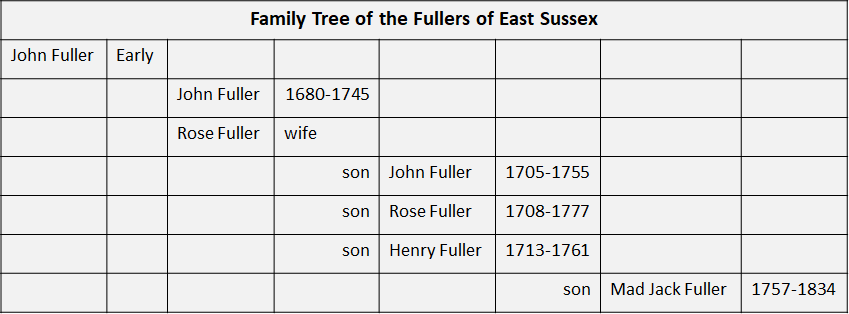
This family tree is to try to help you decypher the following details about the Estate as there are a lot of John Fuller's to consider.
|
The History of the Estate (Sheperdes, Rose Hill, Brightling Park)
▲ |
|---|
Because of the Fuller family's preference of calling their eldest son John, I have put year brackets after the name so you can see the progression through time.
An early record of the family shows John Fuller(early) of Tanners, Waldron, Sussex built the Heathfield furnace, near Warbleton in 1693 originally to produce pots and pans.
Thomas Fuller(John's brother) purchased 'Sheperdes' (later to become Rose Hill) in 1697 from William Peake's family. Thomas Fuller extended the estate to 95ha (230 acres) and rebuilt the house around 1699, and on his death passed it to John Fuller (1680–1745).
The eldest son of John Fuller(early), John Fuller (1680–1745) developed the furnace and a lucrative business to produce cannons and to provide them to the Royal Ordnance for use by both the Army and Navy, however most of the cannons went to the Navy. He married Elizabeth Rose who was a Jamaican Plantation owner Fulke Rose's daughter. On the death of her father the family inherited the Plantation Business. Fuller renamed the house 'Rose Hill' in the honour of Elizabeth and added an additional 59ha (145 acres) to the estate.
Their son, John Fuller (1705–1755), spent heavily on the estate between 1745 and 1755, rebuilding the house and adding the west and the office wings. He also further extended the estate by purchasing another 372ha (920 acres) and created a deer park around the new house.
It would seem that John (1705–1755), had inherited the furnace and the gun making from his father and his second son Rose Fuller (named in honour of his mother) inherited the Plantation business in Jamaica.
On John's(1705–1755) death the estate was passed to his brother Rose Fuller.
There was a third Fuller brother Henry (1713- 1761) who was a vicar in Hampshire, and had a son John Fuller (1757–1834) later to be known as 'Mad Jack' or 'Honest John'. Henry died in 1761 when John was four.
Rose Fuller died in 1777, and passed the estate to his nephew John Fuller(Mad Jack) Henry's son.
After John Fuller's (Mad Jack) death in 1834 the estate passed to his cousin Augustus Fuller who sold it to Percy Tew, who then changed its name to 'Brightling Park' in 1879.
|
| |
|---|
Other Reading ▲ |
|---|
If you would like further details of Mad Jack, the Fullers or the Brightling area please click on the following links (they will open in another window):
|
|
;)